
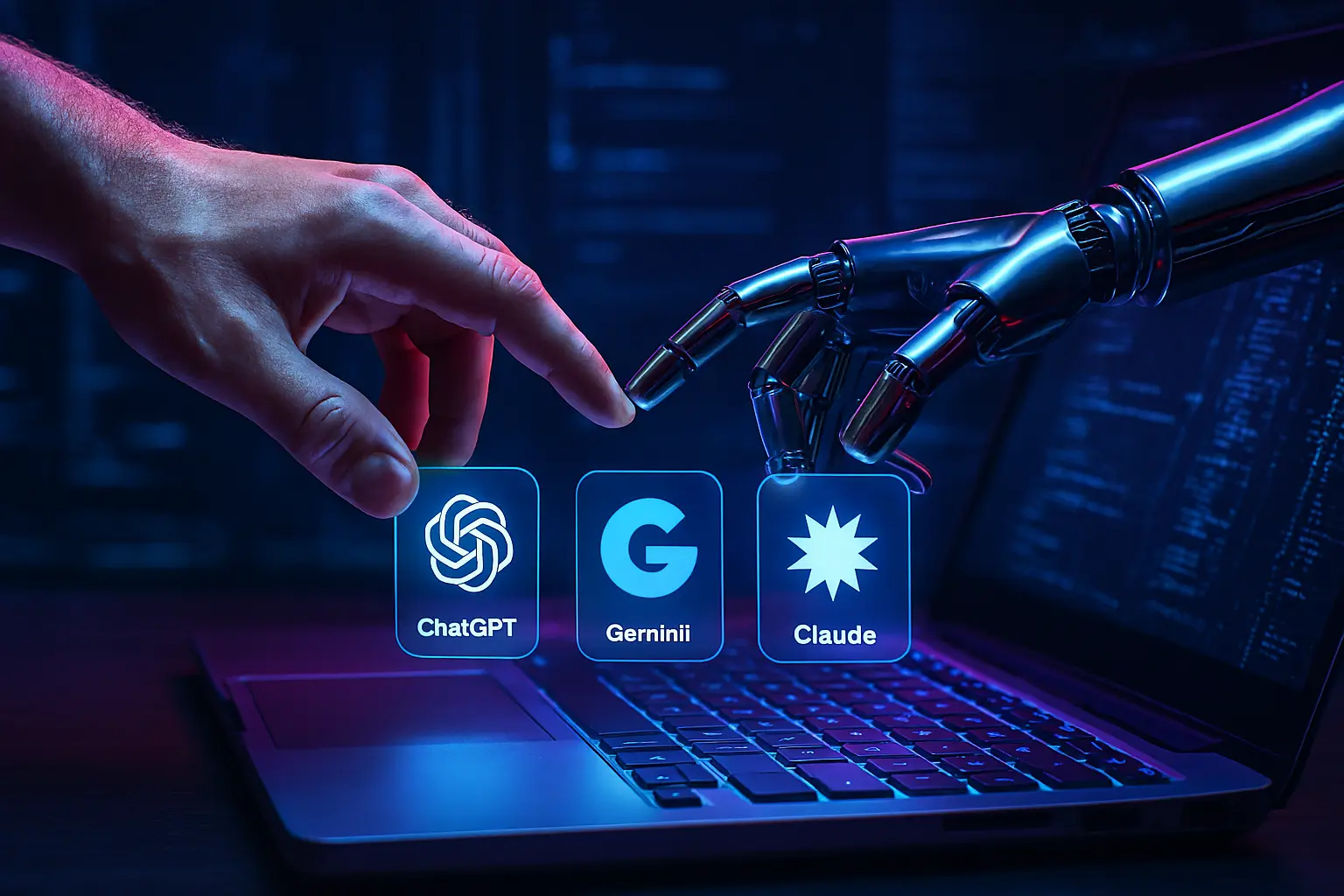
AI Agents in 2026: Your Personal Employee That Never Sleeps

Introduction: The Dawn of the Digital Workforce
The era of giving a simple prompt and getting a reply is over. We’ve entered the age of the AI Agent—a sophisticated program that can perceive its environment, make decisions, and execute multi-step tasks to achieve a defined goal, with minimal human intervention. Think of it as the difference between asking a librarian for a book (ChatGPT) and hiring a personal assistant to get a PhD, write your thesis, and defend it for you (AI Agent).
Why 2026 is the Tipping Point:
- Advanced Reasoning: With Gemini Ultra 3.0, GPT-5, and Claude-3.5 Sonnet, agents now have near-human chain-of-thought reasoning.
- Seamless Tool Use: They can natively operate software, APIs, and bots—from your Google Calendar to your bank account (with permission).
- Proactive Learning: They learn from outcomes and adapt their strategies for future tasks.
If you’re not leveraging AI Agents by now, you’re manually digging a hole while others use autonomous excavators. Let’s change that.
Chapter 1: What Exactly IS an AI Agent? (The 2026 Definition)
An AI Agent is not a chatbot. It’s a system built with four core components:
- Perception: Ingests data from sources (emails, web pages, databases, live feeds).
- Planning & Reasoning: Breaks down a high-level goal (“Increase my website traffic”) into a logical sequence of sub-tasks.
- Action: Executes tasks using tools—sending emails, writing code, posting on social media, making API calls.
- Memory: Stores context and results to inform future decisions, creating a persistent knowledge base.
Real-World Analogy: You tell your agent, “Onboard the new marketing hire, Alex.” It will:
- Perceive the request and check the HR database.
- Plan: Schedule welcome meetings, set up software accounts, share onboarding docs.
- Act: Send calendar invites via Google Calendar, create logins in Slack/Asana, email the document pack.
- Remember: Log what was done for Alex to refine the process for the next hire.
Discover more: Learn about the foundation in our guide: A Beginner’s Guide to Coding vs. WordPress in 2026.
Chapter 2: The Top 5 AI Agent Platforms Dominating 2026
Here are the platforms where you can “hire” your digital employee:
- Devin (Cognition AI): The autonomous coding agent. Give it a software project description, and it will plan, write the code, debug, test, and deploy. It’s like having a senior developer on standby. Perfect for: Entrepreneurs and app builders from our guide on How to Create an App from A to Z.
- GPT-5 + Advanced Data Analysis (OpenAI): Beyond ChatGPT, this is a customizable agent framework. With function calling and a massive context window, you can build agents for content strategy, data analysis, and research.
- Google’s Project Astra: Deeply integrated with the Google ecosystem (Gmail, Docs, Sheets, Search). Ideal for creating a personal executive assistant that manages your digital life.
- AutoGPT & BabyAGI (Open-Source): The foundational frameworks for developers who want to build custom agents from the ground up. Requires more technical skill but offers unlimited flexibility.
- CrewAI: A platform for orchestrating teams of AI agents. Imagine a “Marketing Crew” with a Researcher, a Content Writer, and a Social Media Manager agent all collaborating. This is the future of scalable business operations.
Chapter 3: Step-by-Step: Deploy Your First AI Agent in 1 Hour
Let’s build a “Blog Post Research & Outline Agent” using a no-code platform like Zapier Interfaces or Make.com.
Goal: Automate the initial research phase for a blog post.
Tools Needed: Make.com account, OpenAI GPT-5 API key, Google Sheets.
The Workflow (Agent’s Plan):
- Trigger: You submit a blog topic in a form.
- Perception: The agent (via Make.com) scrapes the top 10 Google results for that topic.
- Analysis: It sends the scraped content to GPT-5 with instructions: “Analyze these articles. Identify key subtopics, missing angles, and top 5 keywords.”
- Action & Memory: GPT-5 returns a structured markdown outline with keywords. Make.com then writes this outline directly into a new row in your Google Sheets content calendar.
- Notification: You get a Slack message: “Outline for ‘AI Agents in 2026’ is ready in the content calendar.”
Result: You’ve just automated 3 hours of manual work. The agent perceived (scraped), planned (decided to analyze), acted (sent to GPT, wrote to Sheets), and remembered (saved the data).
Pro Tip: Start with single-goal agents before building complex multi-agent crews.
Chapter 4: The Mind-Blowing Use Cases Transforming Industries
- For Solopreneurs: A “CEO Agent” that monitors cash flow, sends invoices, follows up on late payments, and summarizes weekly P&L.
- For E-commerce: A “Customer Service Co-Pilot Agent” that reads tickets, suggests replies, processes standard returns, and escalates only complex issues.
- For Content Creators: A “Video Production Agent” that, given a script, sources B-roll, generates AI voiceovers, adds subtitles, and renders the final video.
- For Developers: As mentioned, agents like Devin can handle entire microservices. This complements our tutorial on How to Build the Perfect PC for Programming—your hardware runs the agent that writes your software.
Discover more: For foundational knowledge, read How to Start Programming: Your Friendly Guide to Coding.
Chapter 5: The Critical Challenges & How to Overcome Them
- The “Hallucination” Problem: Agents can make flawed decisions. Solution: Implement human-in-the-loop (HITL) checkpoints for critical tasks.
- Security Nightmares: An agent with API access is a potential vulnerability. Solution: Use strict access controls, API key management, and sandboxed environments.
- Cost Management: Agents can burn through API credits. Solution: Set clear usage limits and monitor costs with dedicated dashboards.
- Loss of Human Touch: Over-automation can alienate customers. Solution: Use agents for backend efficiency, not for replacing all human front-end interaction.
Conclusion: You Are a Manager Now
Your role in 2026 is shifting from “doer” to “orchestrator.” Your most valuable skill is no longer just writing code or content—it’s defining clear objectives, providing quality data, and overseeing a team of human and AI talent. The business that wins will be the one that best leverages its digital workforce.
The question for 2026 is no longer “Should I use AI?” It’s “How many AI Agents do I have, and what are their KPIs?”

